
Disclosure: As an Amazon Associate, Secure4Peace earns from qualifying purchases. Some links in this guide are affiliate links, and we may earn a commission at no extra cost to you. We choose products by reading manufacturer specifications and retailer listings. We have not tested these products ourselves. Prices and availability change often, so we do not list prices. Please check the current details on Amazon before you buy.
Apartments have security problems that houses do not: keys held by people you have never met, shared hallways, thin doors, and a lease that limits what you can change. The good news is that the fixes that matter most are cheap, and most of them will not touch your deposit. This guide starts with what costs nothing, then covers seven products that are worth a look, with a plain answer about who each one is for and who should skip it.
What’s In This Guide
What Actually Goes Wrong in Apartments
Most break-ins come through a door. In the FBI’s 2017 burglary report (the most recent full year we checked), about 57.5% of burglaries involved forcible entry. Another 36.2% were unlawful entries with no force at all, which usually means an unlocked door or window. A further 6.3% were attempted forcible entries. Source: FBI Uniform Crime Reporting.
That splits the job in two. First, make the door harder to force. Second, stop leaving easy openings. Apartments add a few extra problems of their own: previous tenants may still have keys, door frames are often light, and ground-floor sliding doors and windows are easy to overlook.
Start With the Free Fixes
Before you spend anything, do these. They cover the “no force” half of the problem and cost nothing.
- Ask your landlord to confirm the locks were rekeyed or replaced before you moved in.
- Use the deadbolt every time you leave and every night, not just the handle lock.
- Lock windows and sliding doors, including on upper floors if there is a balcony or fire escape.
- Do not hide a spare key outside. Give one to a trusted person instead.
- Do not hold the building door open for strangers, and do not post travel plans online.
- Get to know at least one neighbor who would notice something odd.
Our Home Security Checklist and our guide to securing your front door go deeper on each of these.
Check Your Lease Before You Install Anything
Some upgrades need no tools and leave no marks. A door bar, a plug-in timer and stick-on door alarms all fit that description. Others change the unit: swapping screws in the door frame, bolting a safe to the floor, or mounting a camera in a shared area. Read your lease, and if you are unsure, ask your landlord and get the answer in writing, even by email. We are not lawyers, and rules differ by state and city.
Doors: Your First Priority
1. Reinforce the frame
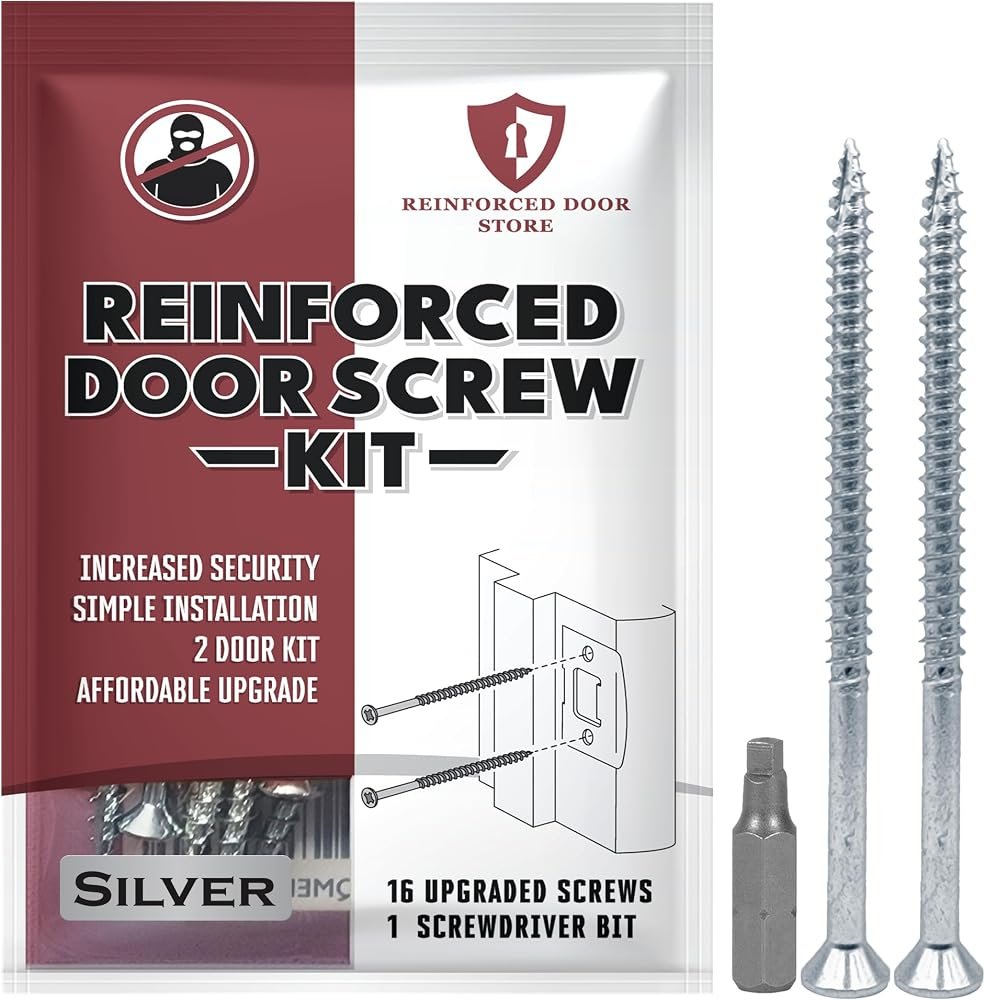
Fix the weak spot: your door frame
Reinforced Door Screw Kit (3-inch screws for strike plate, deadbolt plate and hinges)
The door frame is a common weak point, not just the lock. The strike plate (the small metal plate the deadbolt slides into) is often held in with short screws. This kit swaps them for 3-inch screws that reach deep into the wall framing.
What’s good: It reuses the holes already in your door frame, so there is no new drilling. The listing says one kit covers two doors (16 screws and a driver bit).
What’s not: It does nothing for a weak lock or a hollow door, and you are still changing hardware. Ask your landlord first and read the listing to make sure it fits your door type.
Best for: Renters with a deadbolt on the main door who want the biggest strength gain for the least money.
Free or cheaper option: Check your strike plate screws. If they are short, a hardware store sells long screws individually.
Check it on AmazonPaid link. We may earn a commission at no extra cost to you. Check the current price and details on Amazon.
2. Brace the door from the inside

Extra protection at night: a door bar
BRINKS Adjustable Door Security Bar
A steel bar that braces under the door handle so the door is much harder to push open, even if a lock is defeated or someone else has a key.
What’s good: No tools and no damage. Per the listing it adjusts from 25 to 43 inches and has a padded foot to protect floors, so it lifts out when you move.
What’s not: It only works from the inside. It protects you at night or when you are home, not when you are out.
Best for: Anyone home alone at night, people who worry about old keys still floating around, and travelers.
Free or cheaper option: Always use the deadbolt, even when you are home, and use the door chain or guard you already have.
Check it on AmazonPaid link. We may earn a commission at no extra cost to you. Check the current price and details on Amazon.
3. Secure the sliding door
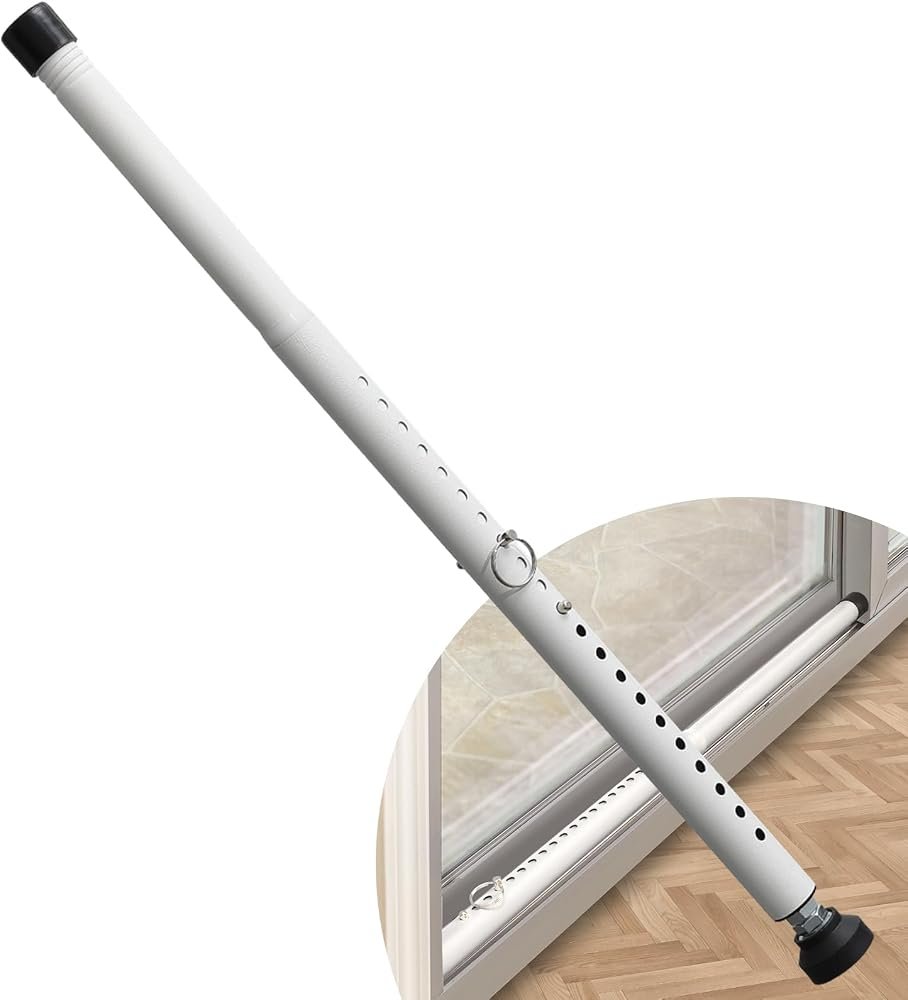
If you have a balcony or patio: a sliding door bar
Adjustable Sliding Door Security Bar (about 18 to 50 inches)
Sliding doors often have weak latches. A bar wedged in the door track stops the door from being slid open even if the latch is forced.
What’s good: It fits without tools and stores easily. The listing describes a 1-inch metal bar with rubber tips.
What’s not: It only works from the inside, and it needs to fit your door width, so measure first.
Best for: Ground-floor and first-floor apartments, or any unit with an accessible balcony.
Free or cheaper option: A wooden dowel cut to length and set in the track works as a basic stop. It is not as sturdy, but it is better than nothing.
Check it on AmazonPaid link. We may earn a commission at no extra cost to you. Check the current price and details on Amazon.
Alerts and Cameras
4. Door and window alarms
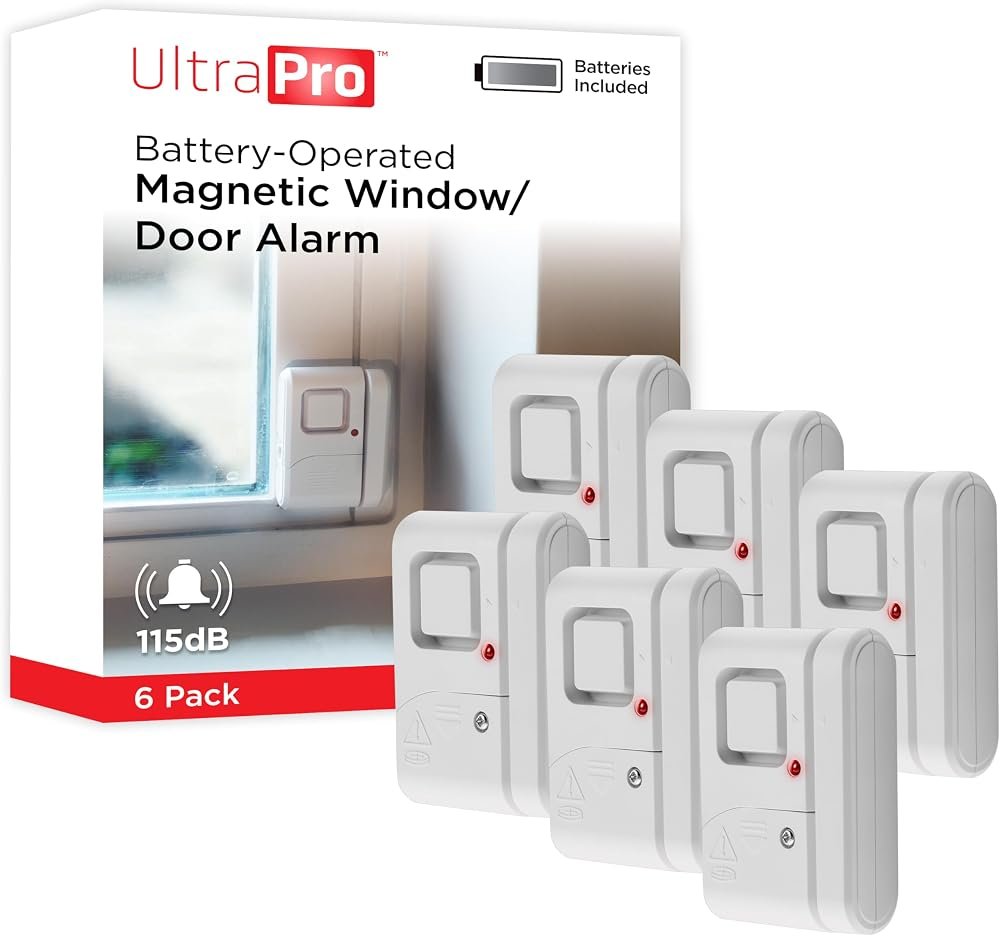
Know when a door or window opens
UltraPro Personal Security Window and Door Alarm (6-pack)
Small magnetic sensors that sound a loud siren (listed at 120 dB) when a door or window opens. There is also a chime mode for everyday use.
What’s good: Batteries are included, and the sensors stick on with double-sided tape, so there are no screws. A low-battery light tells you when to replace them. Six units cover the door, sliding door and windows.
What’s not: They make noise. They do not call anyone or send an alert to your phone, so they only help if you or a neighbor hear them. A neighbor might also hear them go off by accident.
Best for: Light sleepers, first-floor units, and anyone who wants an inexpensive early warning.
Free or cheaper option: Put a small bell or a stack of cans behind a door you rarely use. It is crude but it works.
Check it on AmazonPaid link. We may earn a commission at no extra cost to you. Check the current price and details on Amazon.
5. An indoor camera
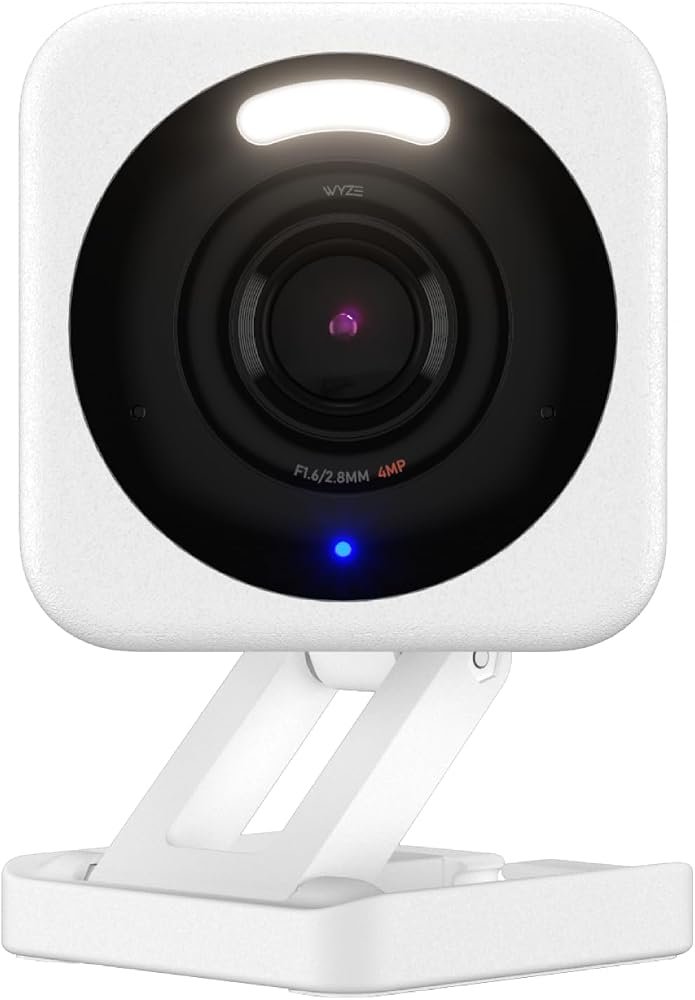
See who is at the door: an indoor camera
WYZE Cam v4 (2.5K Wi-Fi security camera)
A camera aimed at your entry area records motion and lets you check in from your phone. The listing describes color night vision, weather resistance (IP65), and a motion-activated spotlight with siren.
What’s good: Compact and easy to set up. It can also work as a pet or baby camera.
What’s not: A camera records events, it does not stop them. Check which features need a paid plan and whether it supports local storage. Do not point it at a neighbor’s door or a shared hallway, and check your lease and local rules on recording.
Best for: People who want to see deliveries and visitors, and who will lock down the account (see below).
Free or cheaper option: Add a peephole cover or use the peephole you have, and ask a trusted neighbor to keep an eye out.
Check it on AmazonPaid link. We may earn a commission at no extra cost to you. Check the current price and details on Amazon.
Looking Occupied While You Are Away
6. Lights on a schedule
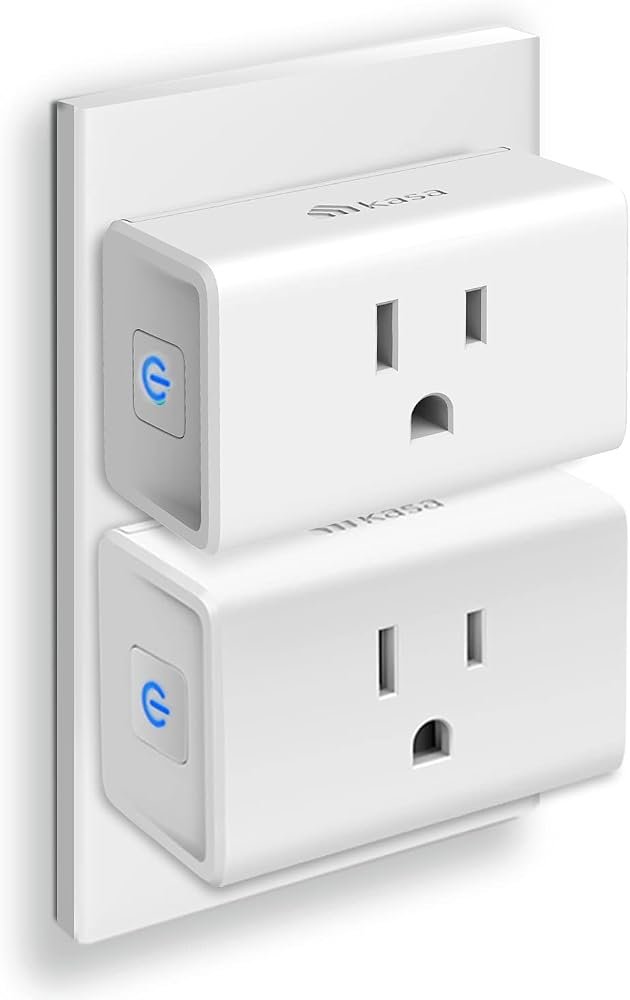
Make the place look lived in: a smart plug
Kasa Smart Plug Ultra Mini 15A
Plug a lamp into it and set a schedule so lights come on and off while you are away. The app also lets you switch it from anywhere.
What’s good: Very cheap and easy. It needs no tools, and it works with Alexa and Google Home per the listing.
What’s not: It needs a 2.4 GHz Wi-Fi network. A lamp on a timer is a deterrent, not a lock, and it is one more connected device to keep updated.
Best for: Anyone who travels, works nights, or wants the lights to follow a routine.
Free or cheaper option: A basic plug-in mechanical timer from a hardware store does the same job with no Wi-Fi at all.
Check it on AmazonPaid link. We may earn a commission at no extra cost to you. Check the current price and details on Amazon.
Our guide to protecting your home while traveling covers the rest of the trip checklist.
Protecting Your Important Papers
7. A fire-resistant lock box
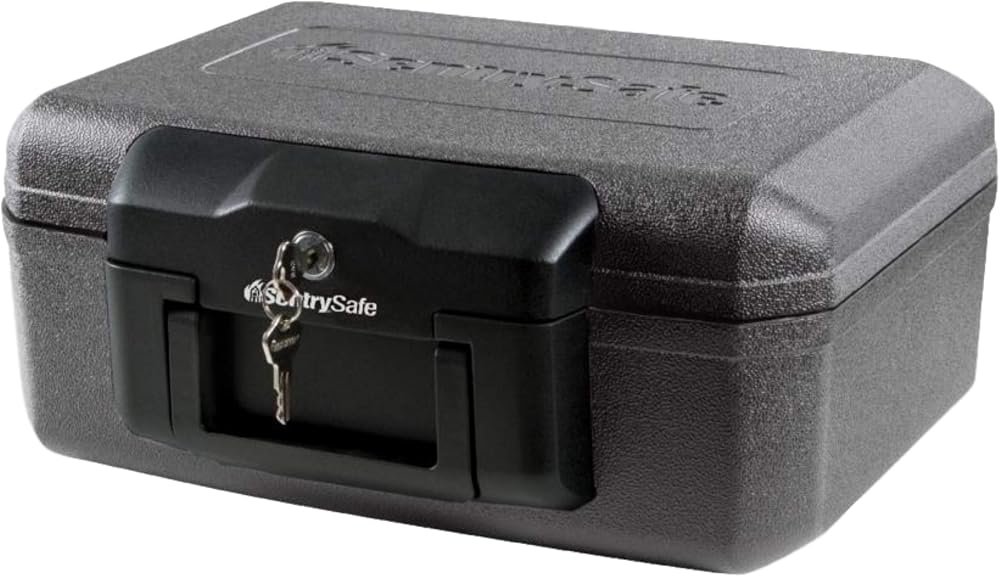
Protect what you cannot replace: a fire-resistant box
SentrySafe Fireproof Safe Box with Key Lock
A small lockable box for passports, birth certificates, backup drives and spare cash. The listing says it is UL Classified to withstand 30 minutes at 1550 degrees F.
What’s good: It protects from fire and keeps documents in one place. Bolt-down hardware is included per the listing.
What’s not: Fire-resistant is not burglar-proof. A small box can be carried away unless it is bolted down, and bolting means drilling, so check your lease first. Keep the key somewhere separate.
Best for: Renters with important papers or a backup drive who want a fire-rated place to keep them.
Free or cheaper option: Scan key documents and store an encrypted copy in a password manager or secure cloud account with two-step verification.
Check it on AmazonPaid link. We may earn a commission at no extra cost to you. Check the current price and details on Amazon.
Lock Down the Connected Devices
Cameras and smart plugs connect to your Wi-Fi, so they are only as safe as your network and passwords. The Federal Trade Commission’s advice for home networks is simple: turn on WPA3 or WPA2 encryption, change the router’s default name and passwords, keep router software up to date, and set up a separate guest network. Source: FTC. In an apartment, be extra careful if the building provides the router.
For each device, use a unique password and turn on two-step verification if it is offered. Our guides on securing your Wi-Fi in 10 minutes and two-factor authentication walk through it.
What to Do First
- Do the free fixes above tonight.
- Reinforce the door frame and add a door bar for nights (and a sliding bar if you have one).
- Add door and window alarms for an early warning.
- Add a camera or smart plug if you want to see or schedule things while you are away.
- Get a fire-resistant box for the papers you cannot replace.
Common Questions
Can my landlord say no to these?
For anything that changes the unit, possibly. The no-tools items are usually fine, but check your lease and ask first.
Do these stop a determined burglar?
No product can. The goal is to make your place a slower, louder and riskier target than the next one, and to give you time to get help.
Do I need a full alarm system?
Not necessarily. A monitored system adds cost and often a contract. For many renters, a layered set of low-cost items is a reasonable place to start. Our guide on home security systems vs cameras compares them.
Sources
- FBI Uniform Crime Reporting, Crime in the United States 2017: Burglary
- Federal Trade Commission: How to Secure Your Home Wi-Fi Network
Disclosure: As an Amazon Associate, Secure4Peace earns from qualifying purchases. Some links in this guide are affiliate links, and we may earn a commission at no extra cost to you. We choose products by reading manufacturer specifications and retailer listings. We have not tested these products ourselves. Prices and availability change often, so we do not list prices. Please check the current details on Amazon before you buy.
← Back to Home Safety GuidesHome Security Guide Series
Each guide answers one question. Pick the one that matches yours.
Start here
- Home Security Checklist — a 25-point walk-through of your own home
- How to Protect Your Home from Break-Ins — the overview: how the layers of protection fit together
- 10 Things Burglars Look For — see your home the way a burglar does
Doors and entry points
- Secure Your Front Door — reinforce the door, frame, hinges and strike plate
- Best Door Locks — choosing the lock itself
- Garage Security — the entry point most people forget
Cameras
- Best Home Security Cameras — which features matter before you buy
- Where to Install Security Cameras — placement, spot by spot
Systems and smart home
- Security System vs. Cameras — which one you actually need first
- Is Smart Home Security Worth It? — costs, subscriptions and privacy trade-offs
- Home Security Devices Worth Buying — the short list of devices that earn their place
- Secure Your Home Wi-Fi — protect the network your devices run on
Your situation
- Apartment Security (you are here) — renter-friendly upgrades
- Protecting Your Home While Traveling — before and during a trip
- Home Safety for Families — a safer home for kids and relatives
- Holiday Safety Guide 2026 — deliveries, travel and seasonal scams